A Guide to the Most Popular Wedding Dress Styles and Silhouettes
Key Takeaways
- A-line and ball gown styles are popular wedding dresses because they flatter many body shapes with ease.
- Understanding different silhouettes helps you choose a dress that highlights your best features and feels comfortable.
- Petite brides might avoid ball gowns as these dresses can overpower a smaller frame.
As a bride-to-be, your proposal won’t be the only instance that heavily relies on your answer in order to proceed. After saying “yes” to a lifetime of happiness with your partner, you’ll have to address many other inquiries related to your wedding, from the number of people on your guest list to the color of your table linens. Since so many details work together to create an engaged duo’s special day, you’ll need to make many decisions as you embark on your wedding-planning journey. Chief among them? Saying “yes” to the dress.
Your wedding dress will be one of the most photographed pieces of clothing you’ll ever wear, which puts a lot of weight on this particular decision. Plus, this single garment usually speaks volumes about the bride’s style and personality and often assists in reinforcing the affair’s aesthetic. Most importantly, the gown that you wear as you walk down the aisle, share your first kiss, and cut the cake will play a huge role in making you feel like the most confident and beautiful version of yourself. All of this is to say you’re probably feeling a lot of pressure to choose your big-day attire wisely.
With the sheer magnitude of options out there, however, finding a wedding dress can make the process extremely overwhelming. Luckily, there are ways to help mitigate the stress of securing your dream gown. First and foremost, before you start shopping, familiarizing yourself with the wedding dress styles and silhouettes available, particularly the ones that best complement your personality and body type, will help you narrow down the seemingly endless number of choices on the market.
Ready to learn more? Below, we’ve created a complete guide to the most popular wedding dress styles and silhouettes, where we define each type of gown and which body type it’s best for, so you can find the gown of your dreams.
A-Line
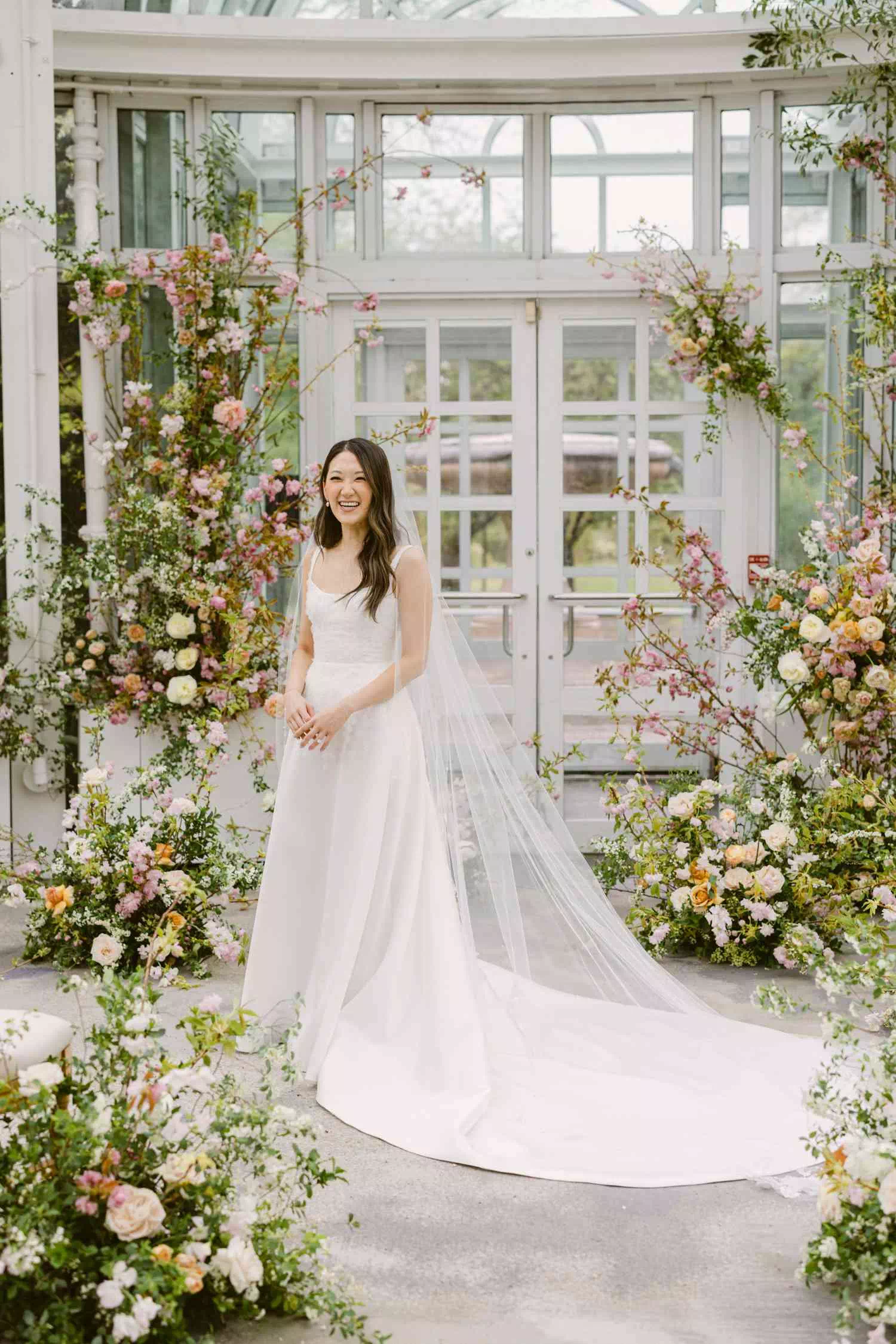
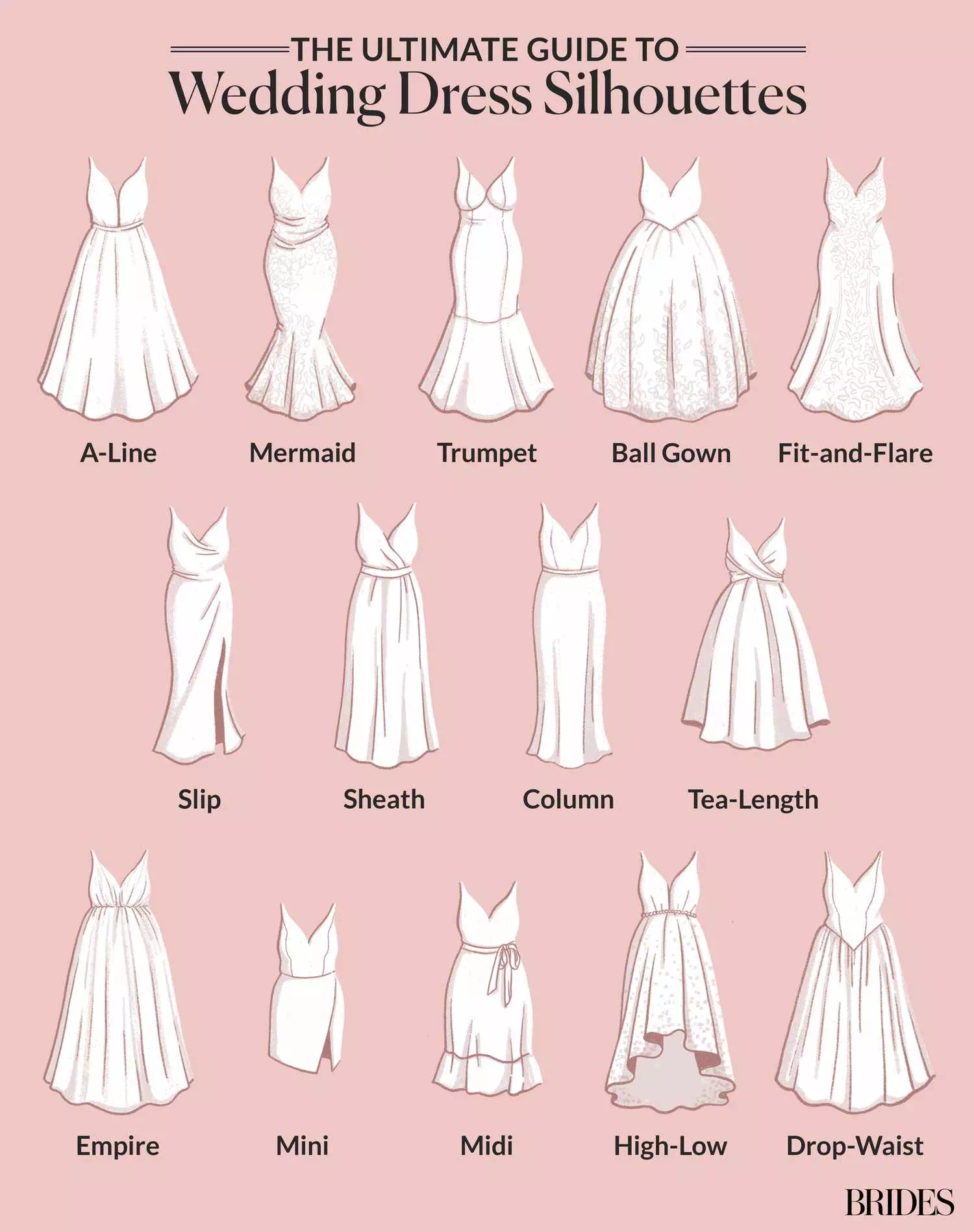
A-line wedding dresses feature a fitted bodice that cinches at the waist and then flares out to create a soft A-shaped skirt (hence the name).
Universally flattering, A-line gowns complement all body types. This wedding dress style is an especially solid choice for pear-shaped, curvy, or petite brides, according to fashion expert Karan Berry. “An A-line gown hugs the waist area, creating a slimmer waistline while flattering the bust,” he describes. “It can make a petite bride look taller with its overall slimming effect.”
Empire Waist
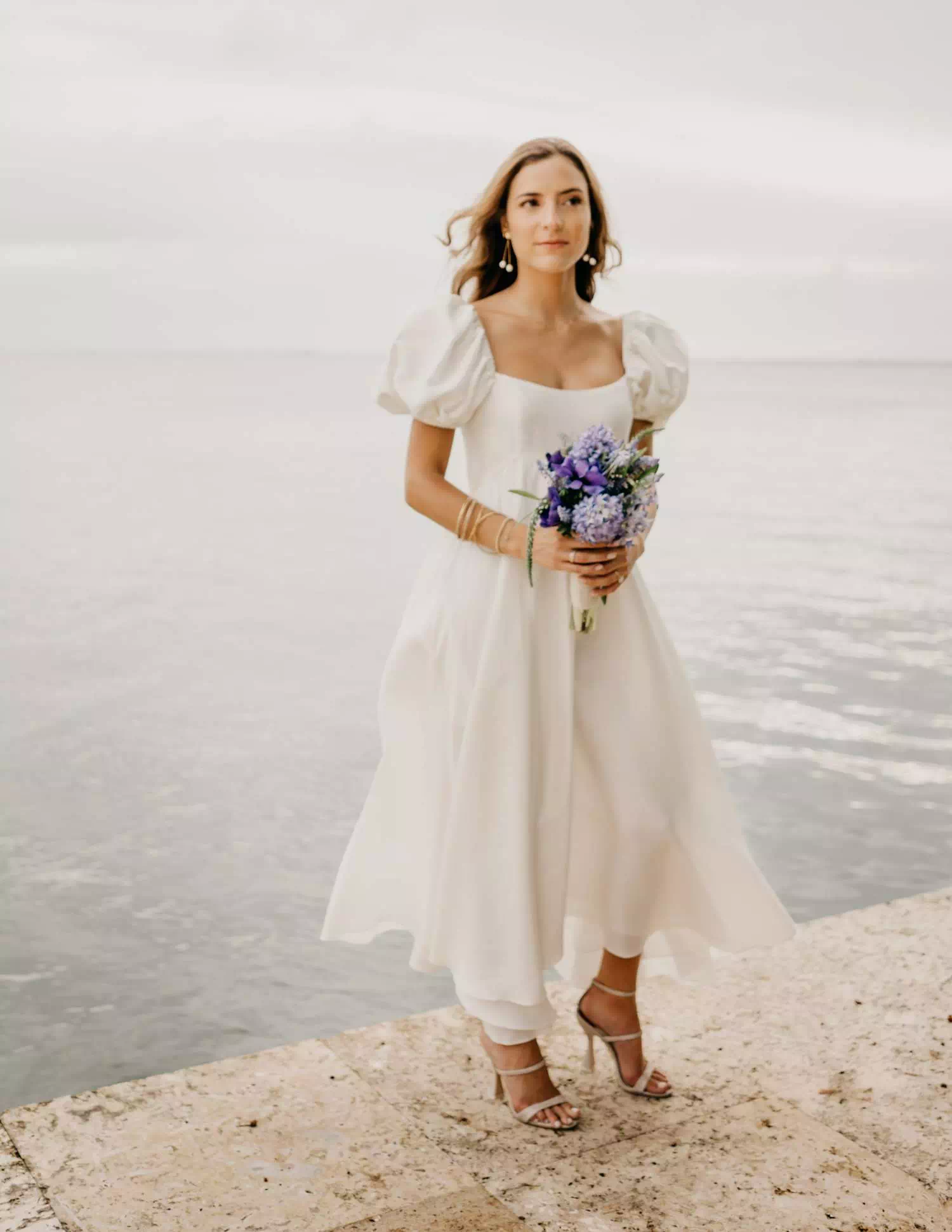
Empire silhouettes feature a fitted bodice, with a waistline that sits just beneath the bust (rather than at the body’s natural waistline), creating an elongated skirt.
Like A-line gowns, empire wedding dress styles are flattering on every bride. With a long skirt that starts just below the chest, this silhouette elongates the body, making it an apt choice for petite brides. It’s also a suitable design for anyone who wants to draw attention to their bust.
In terms of style preferences, empire waistlines befit vintage-loving brides. “Fans of the Netflix show Bridgerton will spot that most of the fashionable outfits of that era are empire waist gowns,” notes Danielle Wen, founder of Lace & Liberty.
Drop Waist
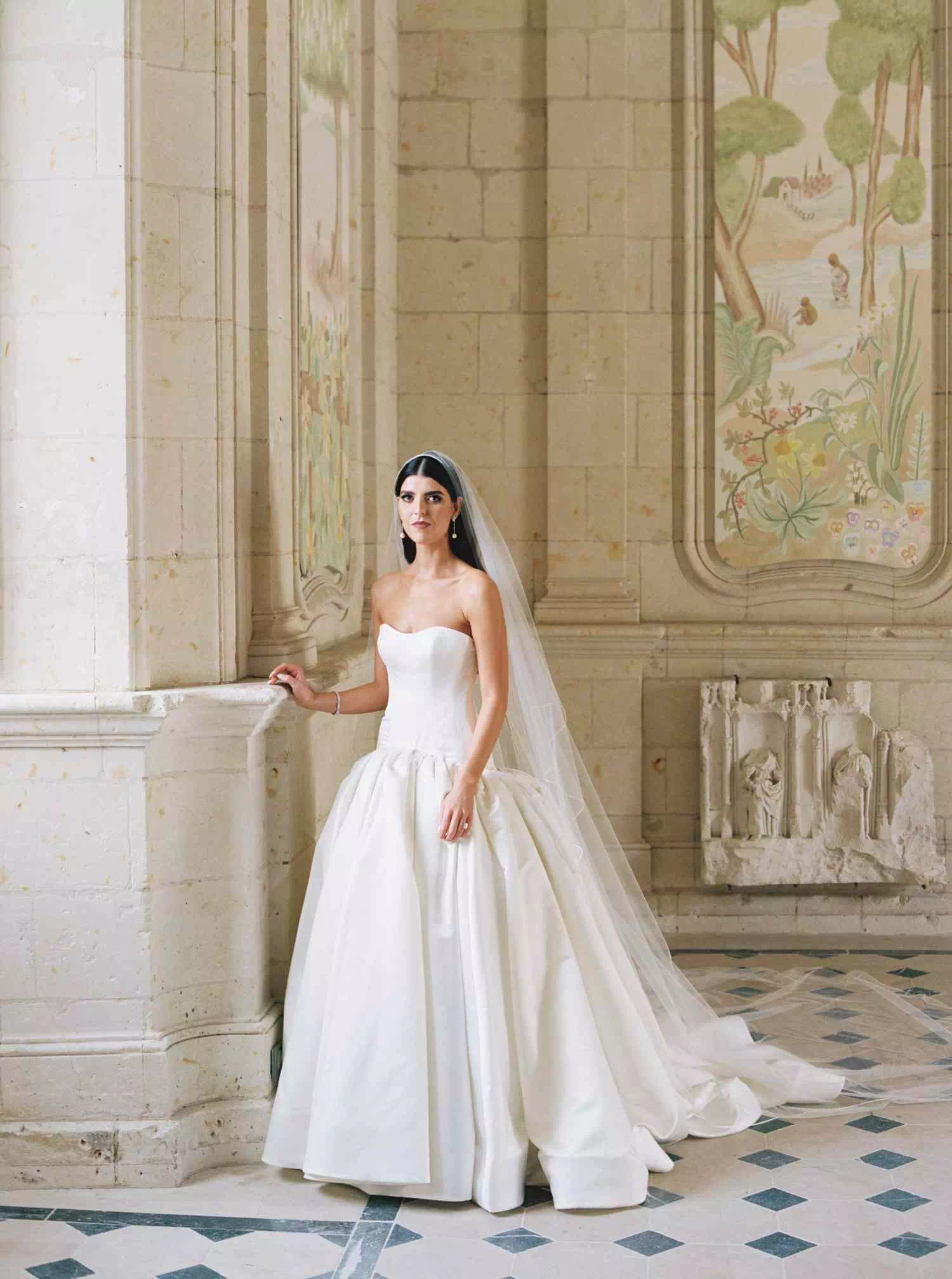
This wedding dress style has a fitted top and a waistline that sits several inches below the natural waist, usually at or below the hipbone, before it extends into an A-line skirt.
Drop-waist wedding dresses provide wearers with a relaxed structure and fit. Since the bodice on this silhouette is longer than that of other wedding dress styles, it elongates the torso, creating a balanced proportion for brides with long legs. Gowns with drop waists are also known for their 1920s-inspired look and feel.
Ball Gown
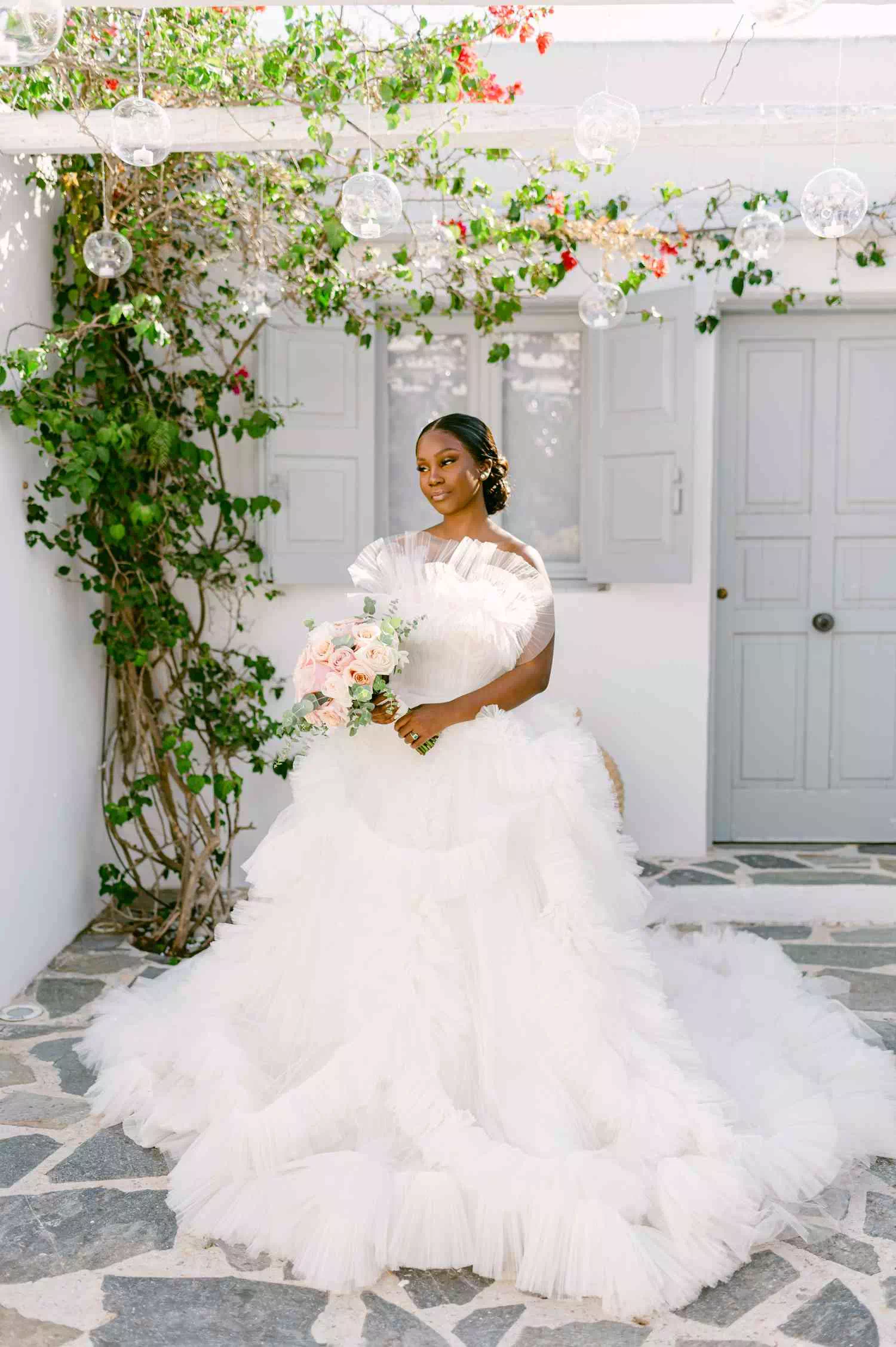
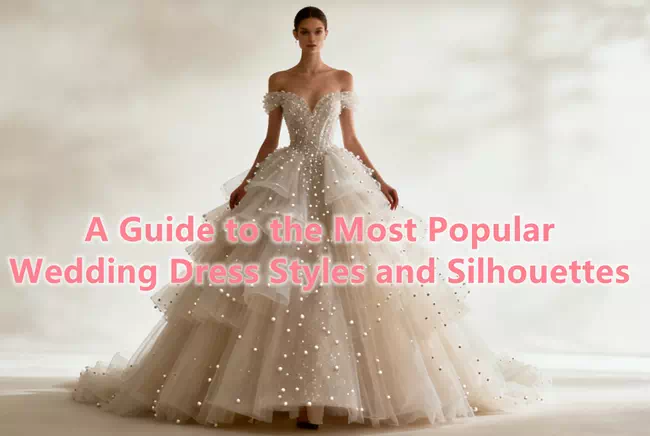
Ball gowns feature a fitted bodice that trails into a voluminous skirt, which flares out from the waist.
If you want to glide into your happily ever after like a princess, this fairy-tale style—both dramatic and classic—is for you. Ball-gown wedding dresses also complement most body types. “The voluminous skirt balances the fitted top,” Bajaj shares. “The fuller silhouette accentuates the waist and hides the lower body.”
That said, petite brides may want to steer clear of this silhouette because it can overpower a small frame. And for any bride who is “conscious of her hips,” per Bajaj, this wedding dress style can lead to the illusion of widening them.
Mermaid
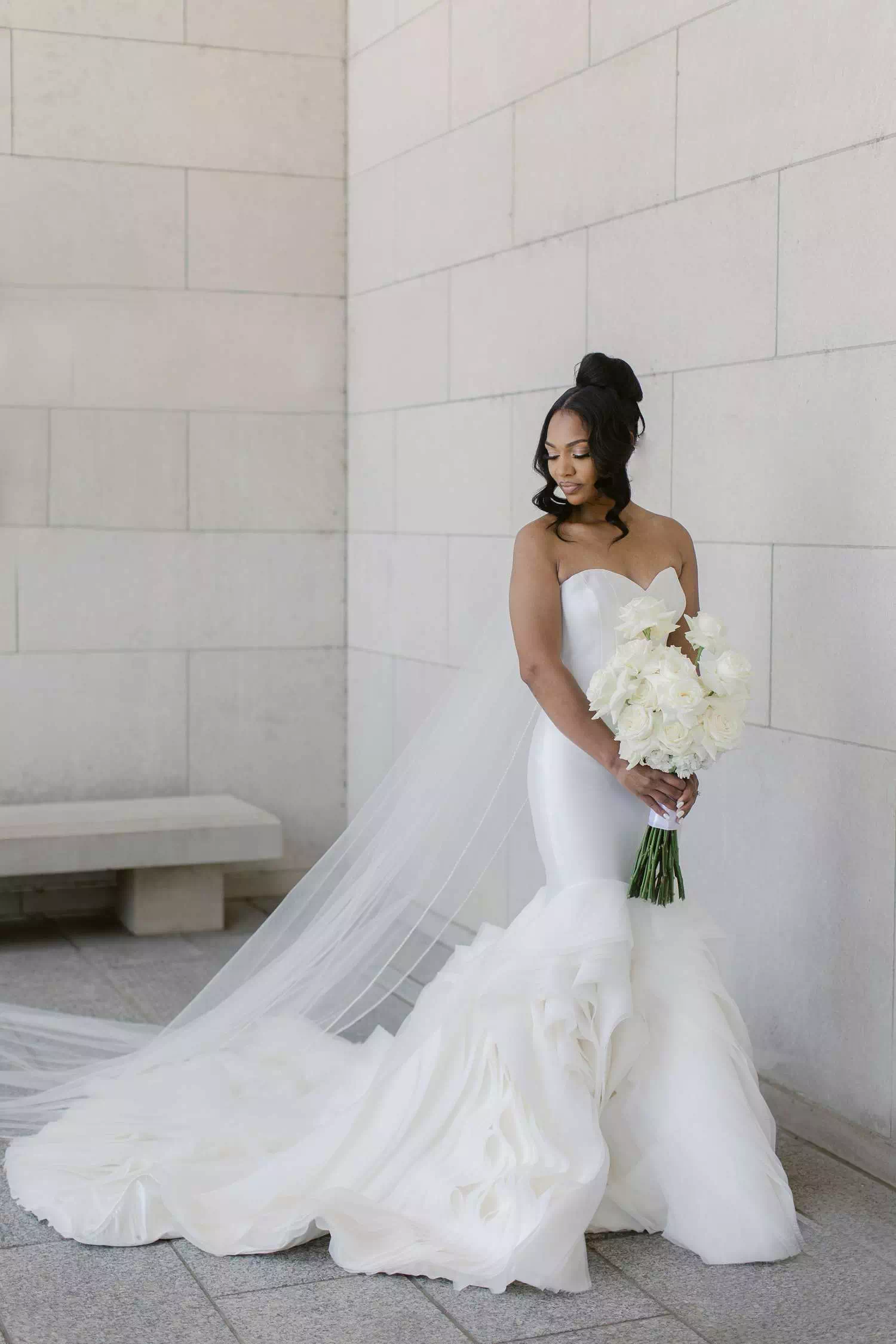
Mermaid wedding dresses contour the body at the bodice, waist, and hips, and then flare out at the knees.
This silhouette is known to emphasize the waist and hips, rather than narrowing them, and is a great choice for those who are apple-shaped. If you’re considering this wedding dress style, Berry recommends choosing the right shapewear. “Considering how fitted it is, you’ll also want to make sure that you can move freely in it and can sit down easily, too,” he says.
Trumpet
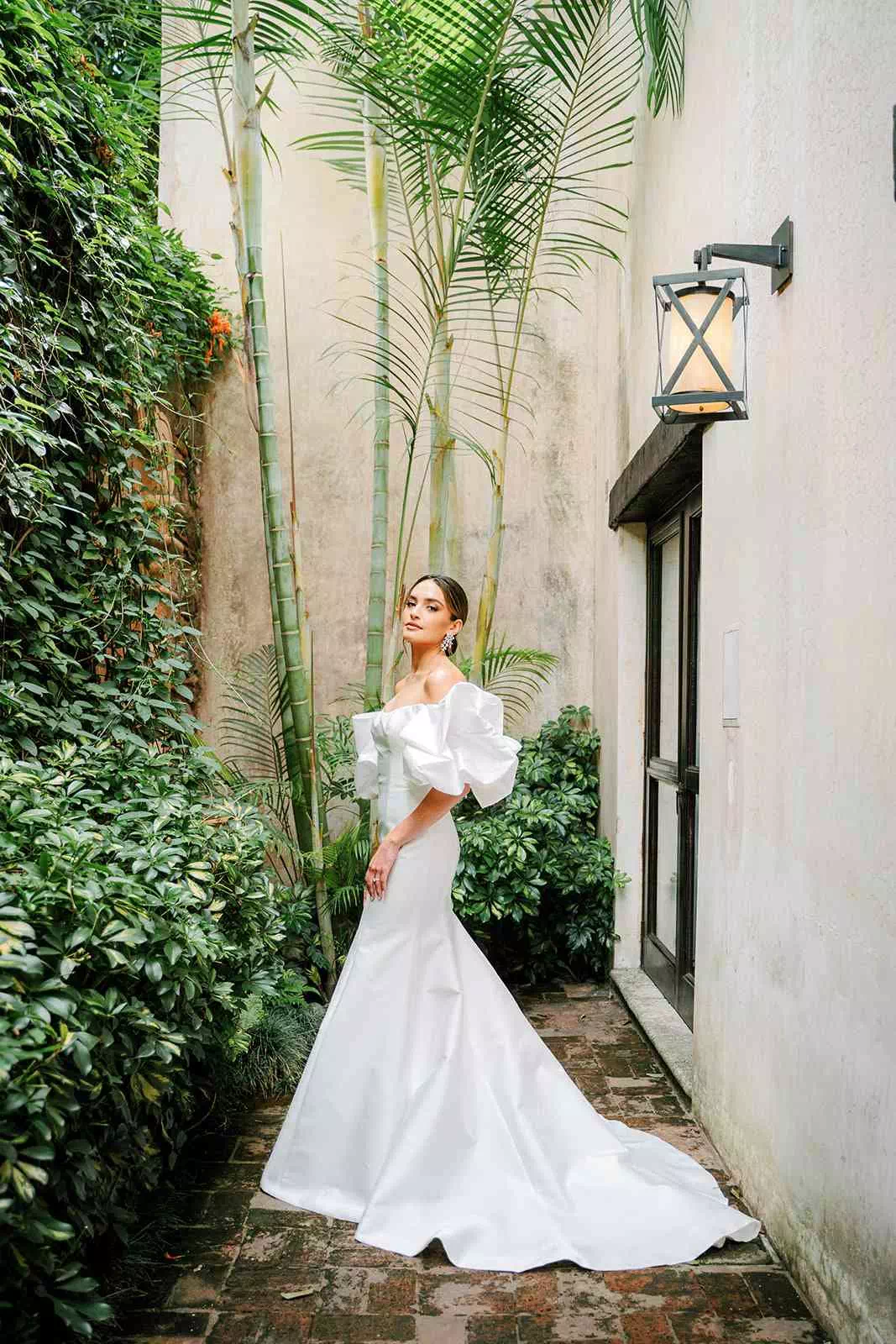
Trumpet gowns feature a bodice that hugs the body from the chest to the mid-thigh, where the skirt then flares out (resembling the shape of a trumpet, like the name suggests).
Trumpet wedding dresses are popular silhouettes for those with slender or hourglass frames, per Bajaj. “Brides who want to flaunt their curves often pick this outfit,” Bajaj notes. It’s also a crowd-pleaser for brides who want a more toned-down version of the mermaid-style design, as it doesn’t have an overly dramatic flare.
Fit-and-Flare
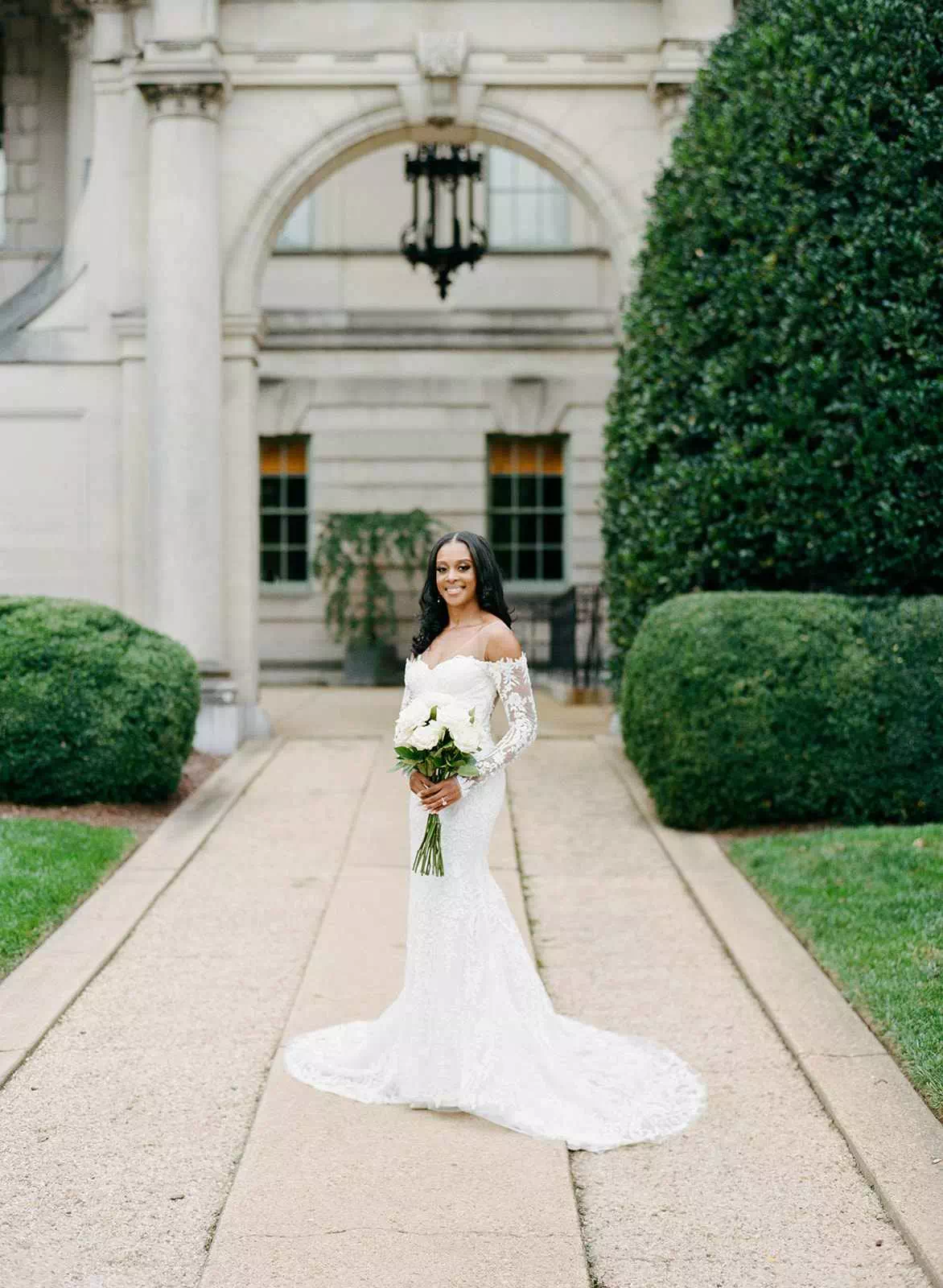
Fit-and-flare silhouettes feature a fitted bodice that extends at or below the hips before it gradually flares out toward the hem of the skirt.
While this wedding dress style is often mistaken for mermaid and trumpet silhouettes, what differentiates it from its counterparts is its gradual flare, not a noticeable one. Because of this distinguishing factor, brides gravitate toward fit-and-flare gowns if they want more movability in their look. “This is a beautiful style that accentuates a bride’s curves without much movement restriction on the skirt,” Wen says.
Slip
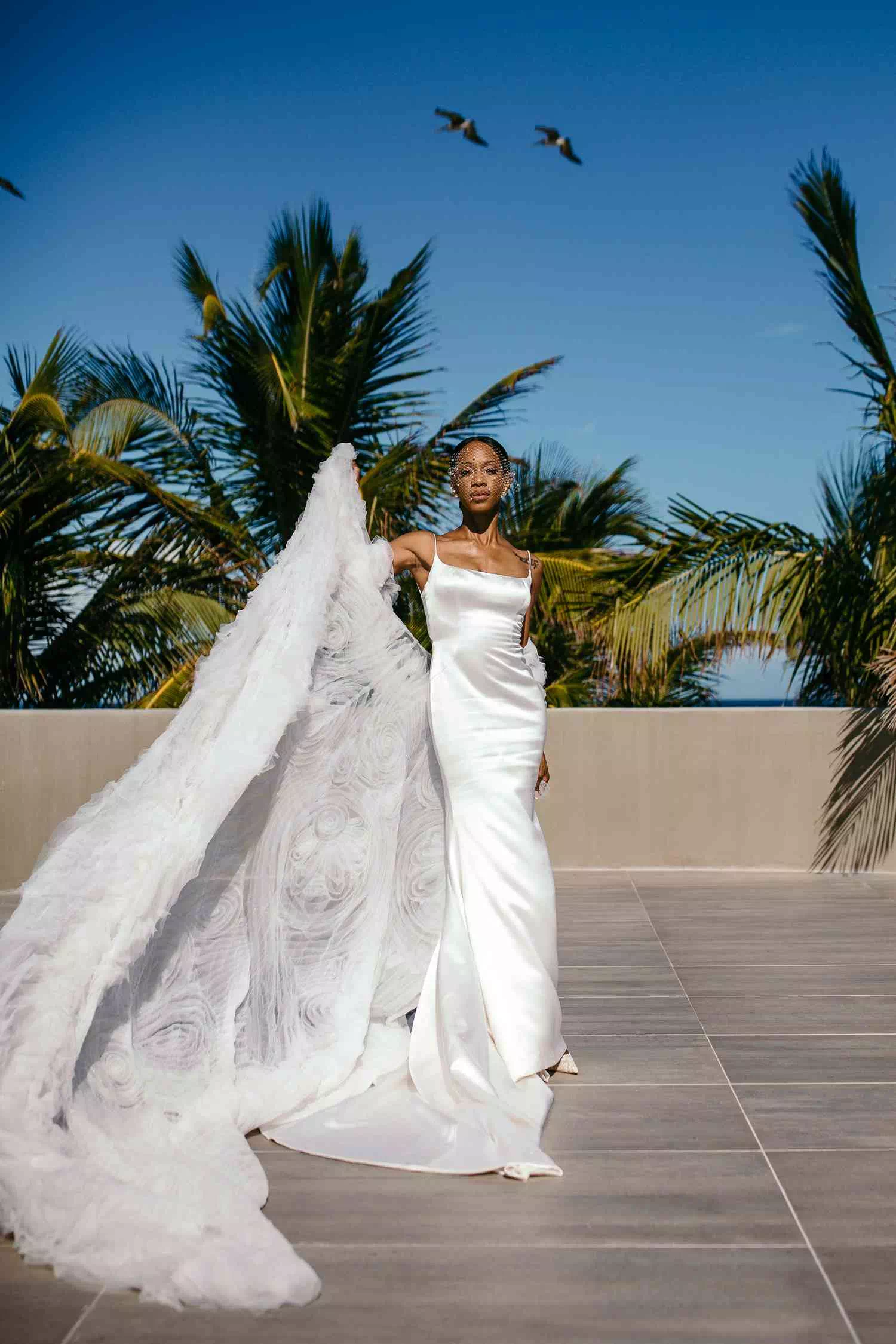
Instead of a distinct waistline, slip wedding dresses are defined by their loose, airy fit that skims the wearer’s curves.
Anyone who wants to channel Carolyn Bessette-Kennedy’s iconic ’90s wedding look, keep this silhouette on your radar. Effortless, minimalist, and impossibly chic, the slip dress makes a case for a “less is more” bridal repertoire. Although these wedding dress styles tend to feature silk or satin fabrics and spaghetti straps, it’s best advised to have this design made to measure, adding any elements of your choosing, such as a cowl neck, bias-cut, or back detailing, for more character, if desired.
Sheath
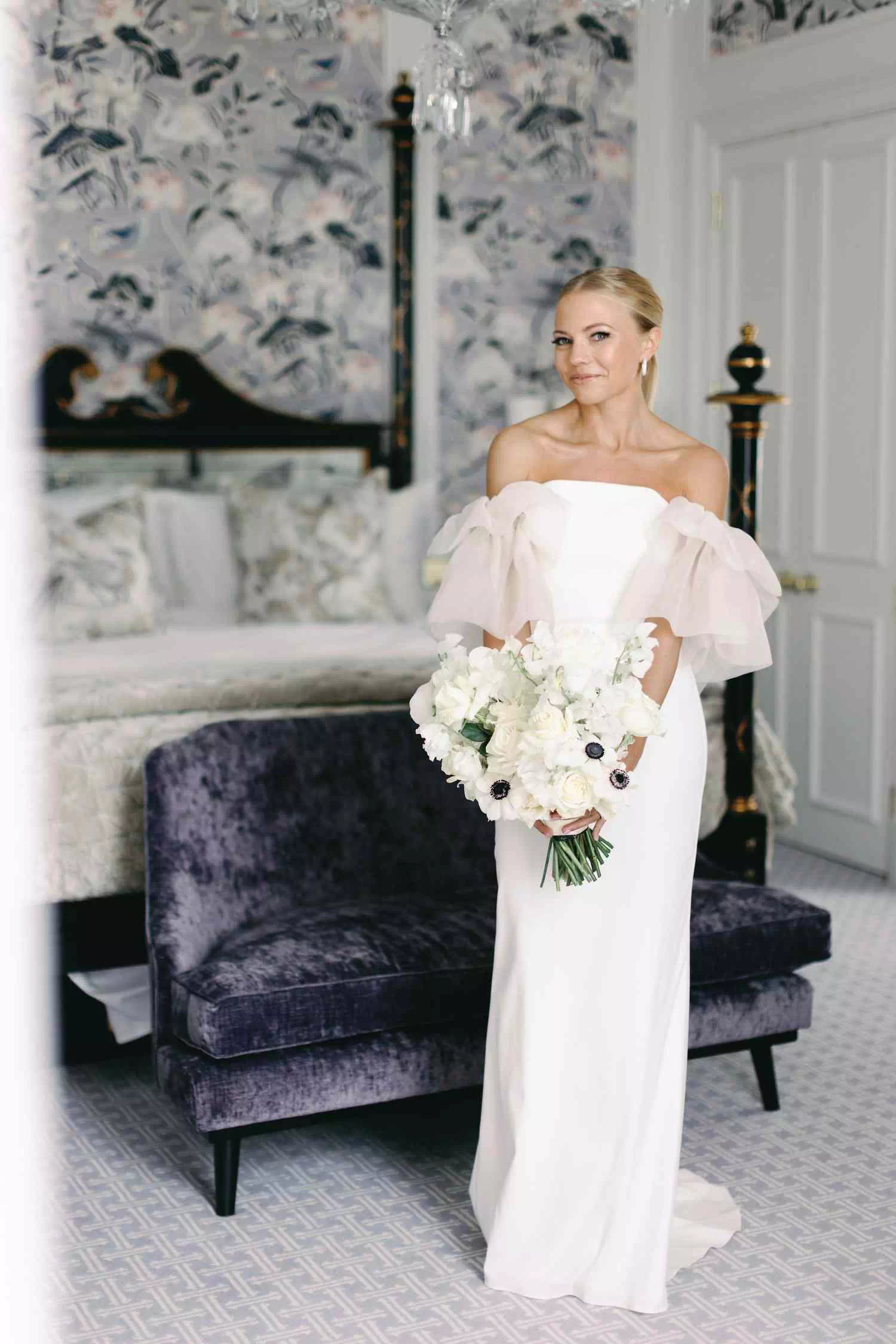
With a straight-cut fit and zero waist seam, sheath wedding dresses contour the entire body, from head to toe.
Sheath gowns flatter brides of every height. “It gives a petite bride an elongated look, which helps her appear taller,” Bajaj shares. “As for a tall bride, it gives her body definition.” Since this silhouette doesn’t have a marked waistline, it’s recommended that those with more boxy frames add a sash or belt to define the waist. Moreover, if you aren’t keen on wearing a frock with a train, a sheath-style dress might be in the running.
Column
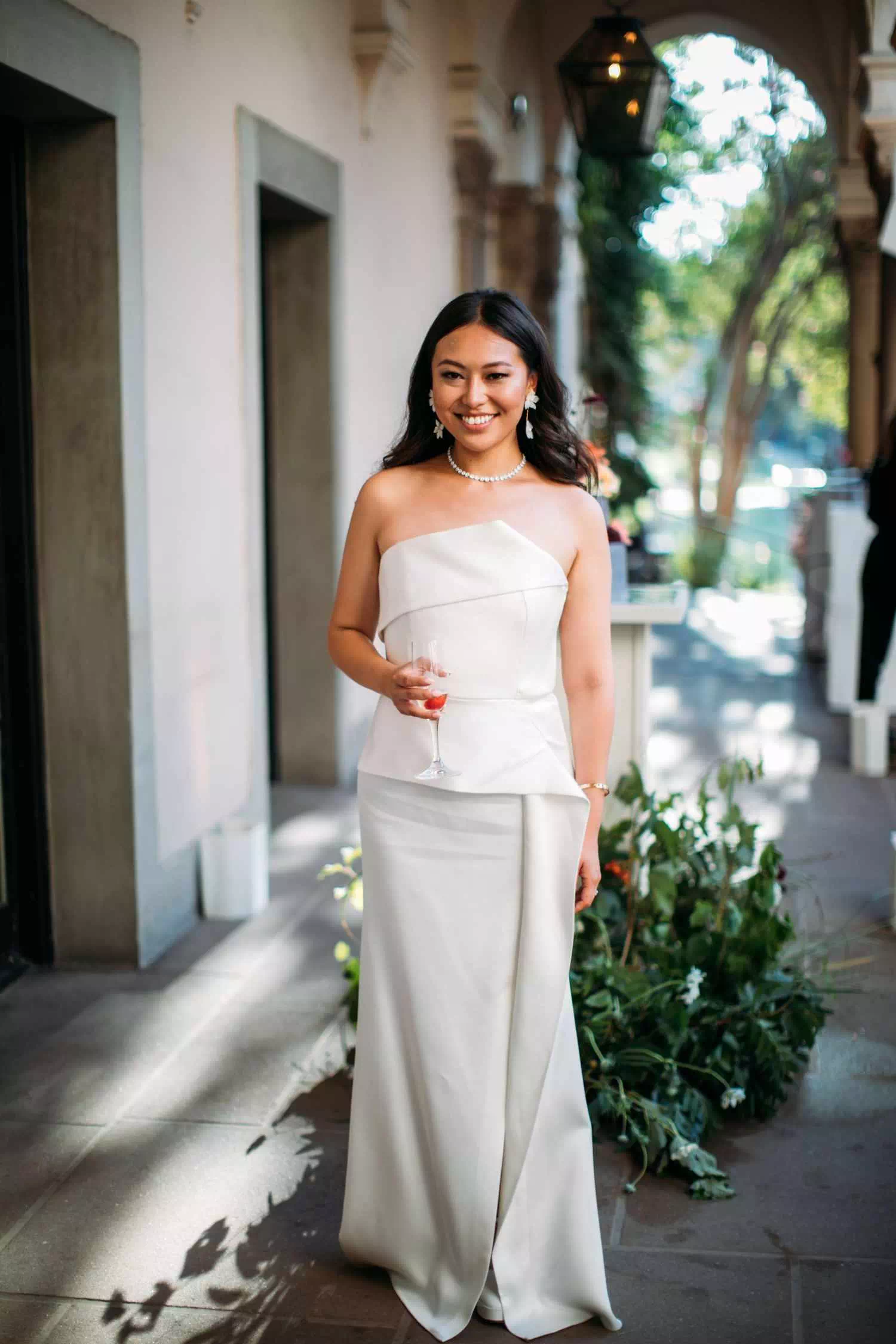
Resembling the appearance of a column (as the name implies), column wedding dress styles have a slim-fitting, straight-cut silhouette without any shaping.
Without much shape, column wedding dresses often use taffeta, brocade, corded lace, and other similar fabrics to give the silhouette some structure. In most cases, brides who select this style have their dress tailor-made to accentuate their figure. So, for those with more athletic frames, there’s no need to overlook this wedding dress design.
Tea-Length
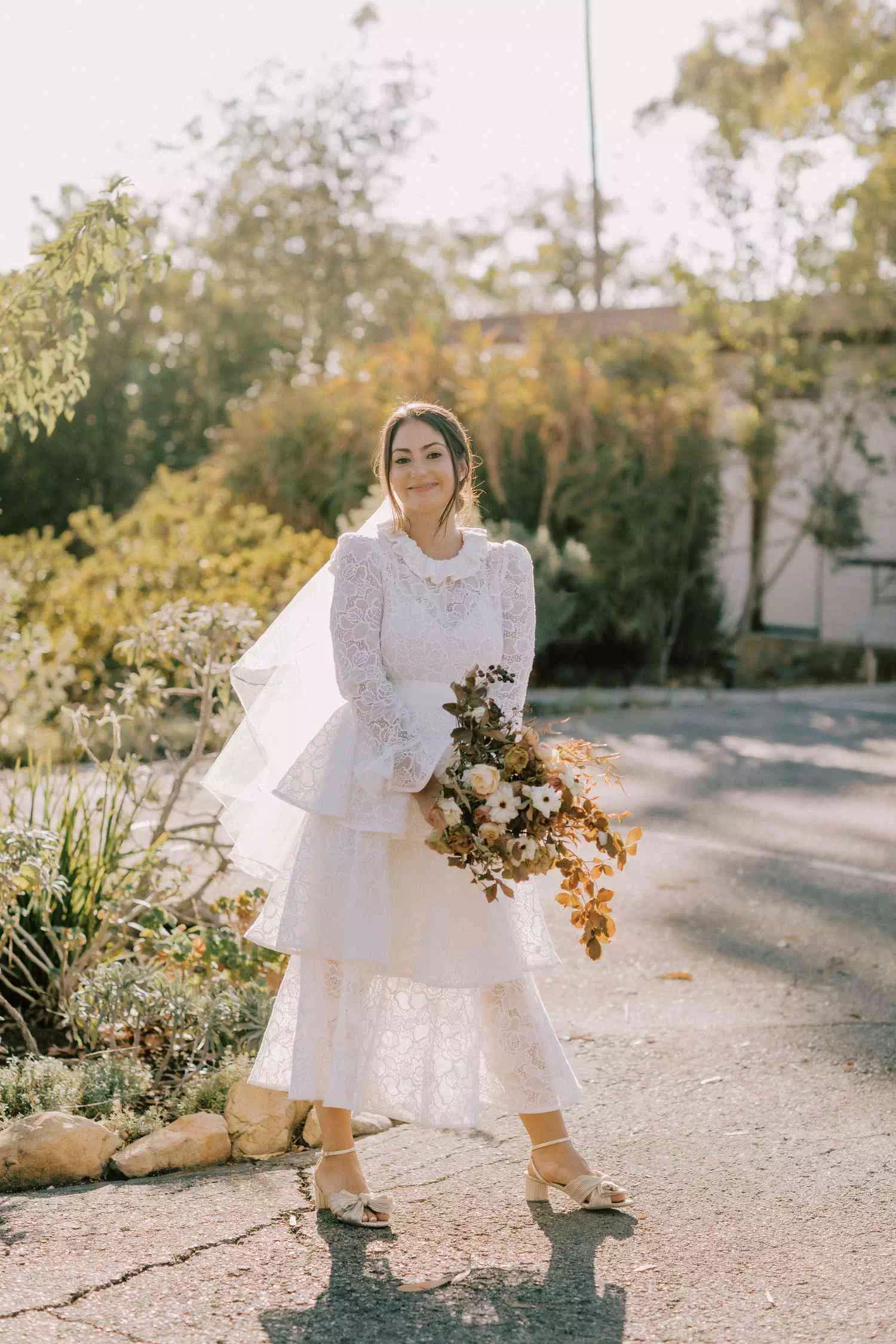
Tea-length wedding dresses have full skirts that hang at the natural waist and hemlines that fall just above the ankle.
If you’re searching for a style that’s vintage yet contemporary, then this ankle-grazing silhouette is one to consider. The cinched waist makes it a suitable selection for brides who want to accentuate their curves, while its raised hemline is appealing to those who want to show a bit of leg. Since the hem of this type of frock doesn’t graze the floor, this wedding dress style leads to more laid-back look that’s perfect for intimate or daytime affairs, Bajaj suggests.
Midi
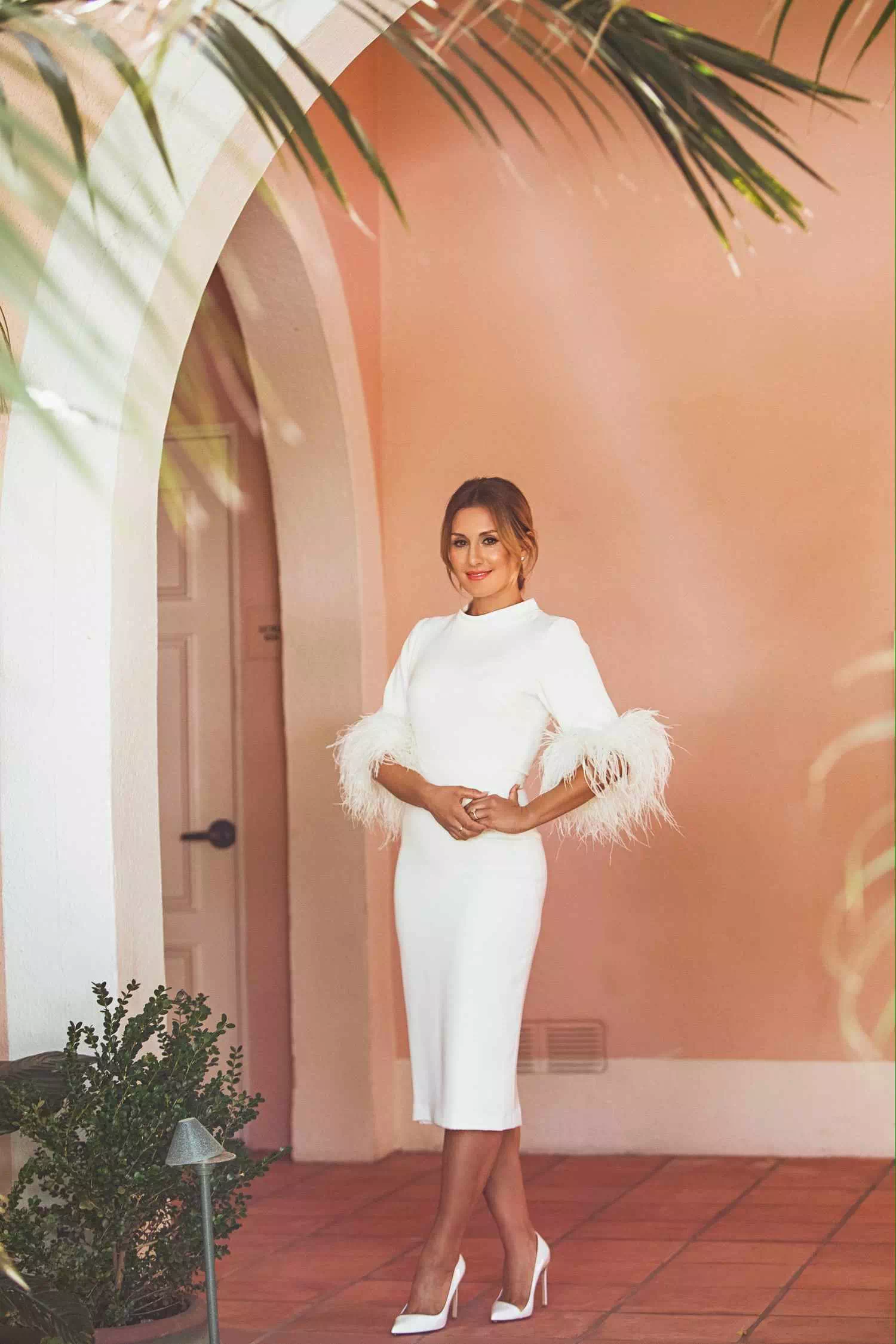
Slightly shorter than tea-length wedding dresses, midi gowns have hemlines that fall between the knee and ankle, often landing at the mid-calf.
First gaining popularity in the ’40s and ’50s, midi wedding dress styles are filled with vintage charm. Because they cover most of the leg, this hemline complements tall brides. They’re also considered a more conservative and casual look than floor-length styles. So, if you’re thinking about heading to the courthouse or throwing a low-key ceremony and reception, midi frocks are one to keep in mind.
High-Low
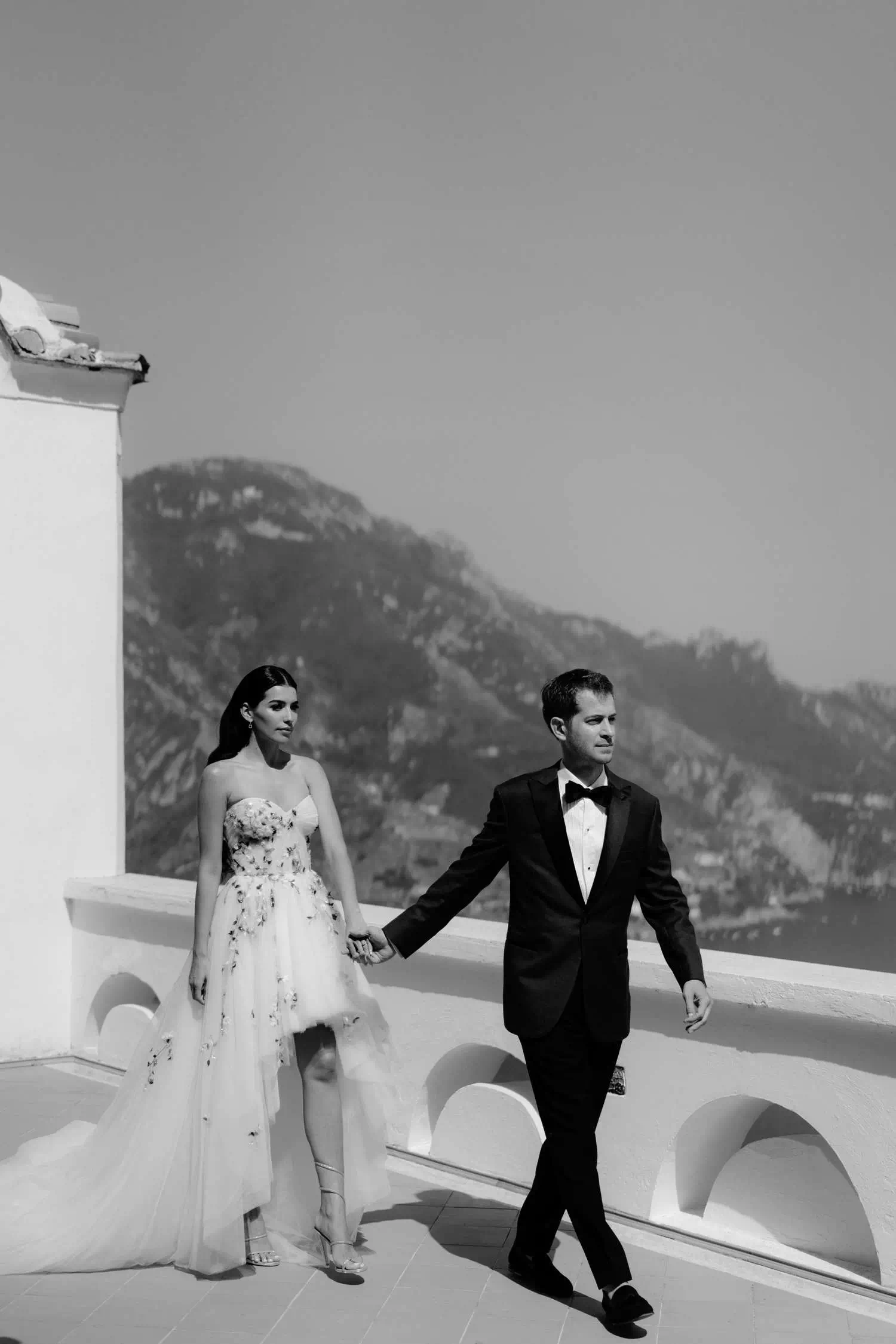
High-low wedding dresses feature a circular hem, where the front hemline is raised above the ground and the back hemline hits the floor in some capacity.
There are different iterations of the high-low style that evoke various levels of drama: The front can have a hemline as short as above the knees, and the back can have a train that billows across the floor. High-low silhouettes are classic yet unexpected, whether you select this option for your rehearsal dinner, ceremony, or after-party. “[It] creates a fun asymmetrical look to the dress and is great to show off your beautiful bridal shoes,” Wen notes.
Mini
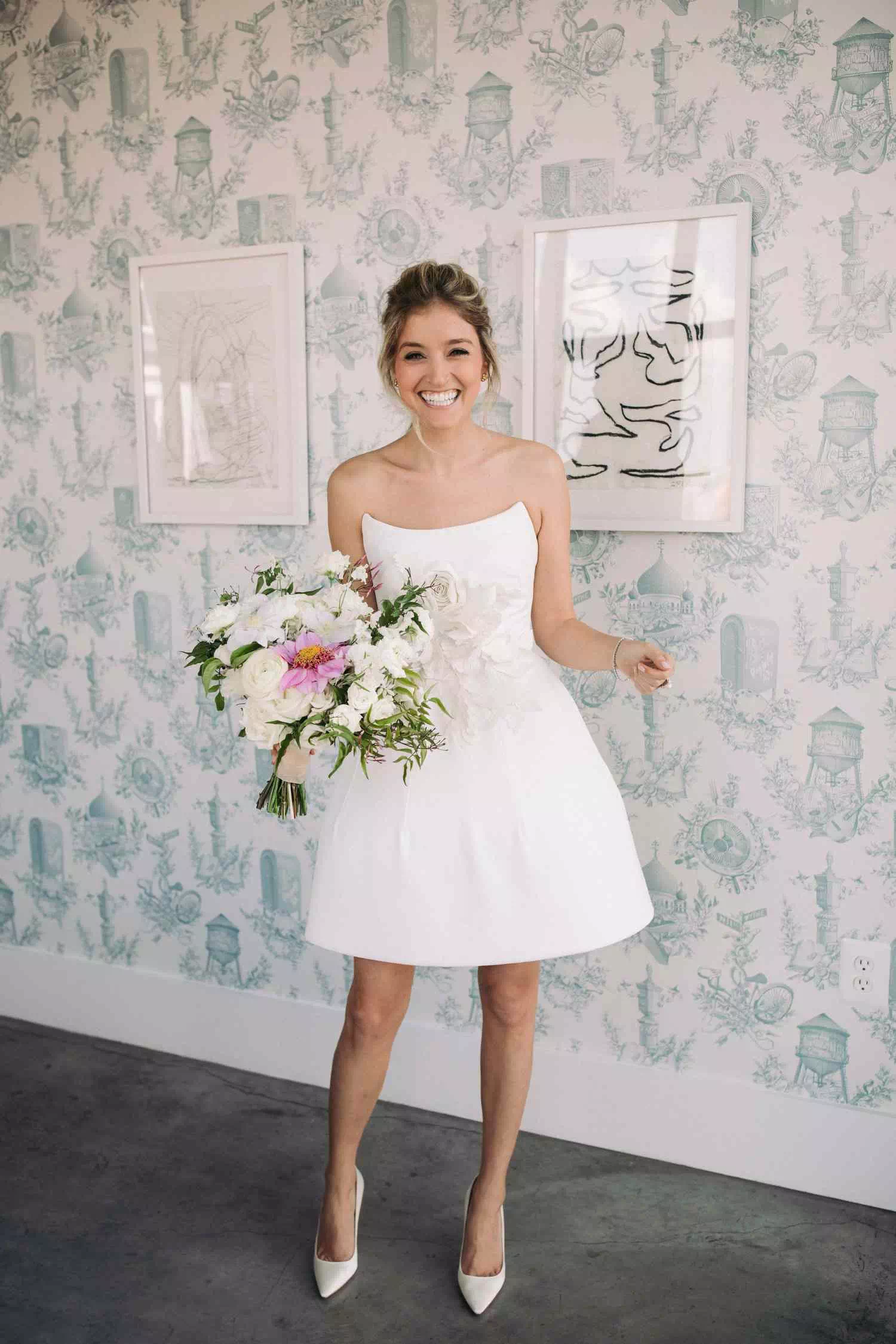
Mini gowns feature hemlines that rest above the knees.
Wedding dresses with short hemlines are perfect for the unconventional bride or for anyone who’s eloping or tying the knot at a less formal setting, like a courthouse or backyard. If you’d rather wear a more traditional gown for your ceremony, you can change into a shorter frock for your reception or after-party. Regardless of the occasion, wearing this wedding dress style won’t overwhelm a petite bride’s dainty frame and short stature.
-
What is the best wedding dress silhouette for plus-size brides?
A-line wedding dresses are the most universally flattering, given their nipped-in waist for shape and flared skirt for comfort. Trumpet styles offer the same benefits, yet they’re more appealing picks for those who want to flaunt their curves.
-
What is the best wedding dress style for pregnant brides?
Trumpet- and mermaid-style wedding dresses are great choices for those who want to show off their baby bump while supporting their belly. For brides who prefer concealing their stomach, stick to silhouettes with an empire waist.
-
What is the most popular wedding dress silhouette?
Historically, ball gowns and A-line silhouettes are the most popular wedding dress styles. Both types of gowns feature details that are known to be universally flattering: a cinched waist and a more voluminous skirt.